
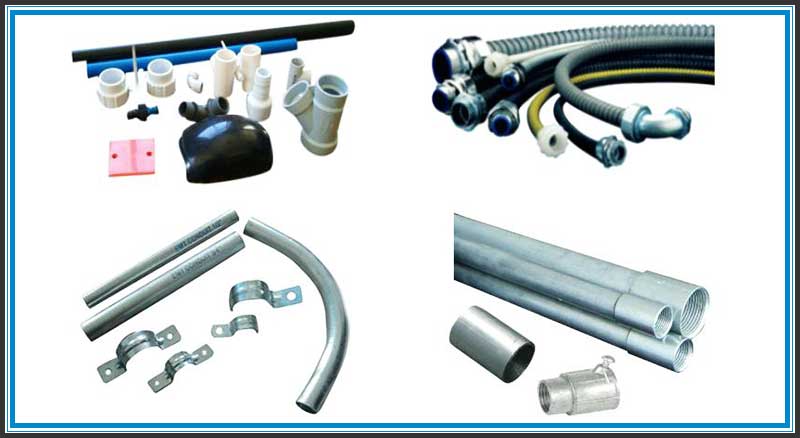
Channel and pipe conduits are in common use for routing of electrical cables and wires during installation. The flexible cable conduit used in the installation of electrical wires and cables have manifold uses such as to provide protection to the overall system by safeguarding it from any damage. These are also a safety requirement for laying of underground electrical cables by preventing any accidental leakage of dangerous electrical charges, short-circuiting and from damage by water because of the rain, roots of the plants, reptiles, insects, and lot more.
Nowadays, electrical wires are made of flexible materials such as plastic, metal, or other metal-reinforced, and waterproof fibers while in older times these were made of terracotta or baked clay that were prone to cracking and breakage. Electrical conduit nz made of heavy-duty, lightweight PVC can withstand great variations in temperature, remain without cracking or splitting, and are corrosion resistant giving years of trouble-free service.
The split flexi conduit is like a plastic conduit section that has been split down one side and is used for covering an existing length of damaged conduit or when the wiring inside needs repairs. Such conduits allow easy access to the interior of the existing conduit without having to cut or re-work the cables and wires- always an expensive proposition. Interlocking end design provided in split conduits facilitates easier fixing with the existing one. Contact us for Electrical conduit nz
Split flexible cable conduit also find use in repairing the damaged underground fiber optic cables as they provide a secure and sealed fit to prevent moisture, dust, and soil from entering the interior of the conduit. Split conduits also protect the wires from the effects of weathering as they are specially designed for use in power and communications service systems. Equipped with interlock design, split conduits don’t need any external glue, tape, or sealant and are used for fiber optics applications being pressure, impact, and UV ray resistance.
Split flexible electrical conduit made of polypropylene can withstand temperatures ranging from – 40 to 107 degrees Celsius and the flexible material allows easy access to the internal wiring when it has to be installed, removed, or repaired. On other hand, Nylon split conduits are useful for fire-resistant applications. These normally come in a dispenser-box format, when these are needed to be pulled out and retracted. For some applications, split conduit formats may include a split conduit coupling for better grip.
A major benefit of using the flexible electrical conduit for wiring throughout the home is its ability to give greater protection to the complete system. Traditionally, fire clay, fiber, plastic, or metal material used to manufacture the sleeve is strong and durable and has the potential to last for a very long time.
The use of split flexi conduits has the advantage of making it a lot easier for the complete system to be renovated or for replacing old and damaged wires installed earlier. Over and above, the process of passing wires through a smooth sleeve is a lot easier as compared to working with random sized holes cut into the walls.
Also, in case the wiring is short, it is simpler to locate and repair the defective concealed wire kept together in a conduit, more so for installations that are behind a wall or underground.
Split flexible cable conduit or ducting is available in hardware outlets in specified lengths and specifications.
 TECH BASHA