
All buildings, residential, or commercial must have adequate provision of electricity in all areas, and provision for the same has been made at its design stage only. For the purpose electrical cables of correct specifications need to be fixed from point of supply to point of service. For reasons of safety electrical cables cannot be installed in a haphazard manner and, therefore, flexible electrical conduit are fixed as per design provided and electric cables run through the conduits up to point of service.
Depending upon requirements, the conduits can be fixed over the surface of the wall or maybe inserted within the walls. Electrical conduit NZ serves to maintain the aesthetics of the building hold the cables in place and protect the cables from any external hazard, mechanical or thermal stress. Specifications of the conduit to be used are determined based upon the size and weight of the electric cable. Environmental conditions of the area where the building is located would also play a significant role in choosing the right conduit.
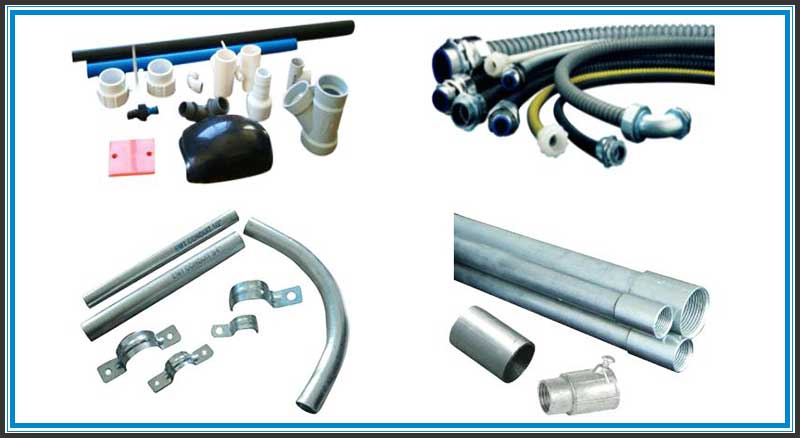
Different types of Electrical conduit NZ available for various applications are outlined hereunder.
In general, electrical conduits may be rigid or flexible depending upon the material used for their manufacture. The material used to manufacture conduits could be metal, aluminum, PVC, or steel. For flexible cables to be routed through multiple turns flexible electrical conduits are preferred. For normal residential applications, armored cable conduits or PVC conduits are recommenced for use. The advantage of using an armored cable conduit is that it protects the electric cable from any possible nail puncture.
- PVC conduit could be good
PVC conduits could be a good choice for their lower costs. These conduits protect cables from water that may seep into the wall. For underground or open environment applications having exposure to atmospheric dust, humidity, and heat, PVC conduits are recommended for routing the electric cables in a correct manner.
For applications in the basement or garage, electrical cables need protection from rats and other insects that could damage cables generally running over the surface of the wall, metal conduits could be the best option. In such applications where these metal conduits have to run through turns, conduit bender, and couplings, offset fittings and elbows may be needed. Metal conduits are generally manufactured from metals like steel or aluminum. Wherever damp and moist conditions exist because of environmental reasons, the use of aluminum conduit could be a good idea to prevent rusting.
- Liquid-tight flexible nonmetallic Conduit
Liquid-tight Flexible Non-Metallic Conduit has a circular cross-section with a seamless PVC inner surface and an essential strengthening material within the conduit wall. This category of electrical conduit NZ is recommended for use in wet, dry, or even oily locations. These conduits are also suitable for both indoor and outdoor locations and for either or both industrial and commercial applications. These conduits are also suitable for use in swimming pools, spa, and air conditioning units.
- Liquid-tight flexible metal conduit
Liquid-tight metal conduits are covered with a waterproof plastic coating and are preferred for use in high moisture applications. These conduits are mostly used in applications that include water treatment plants, paper mills, bridges, and petrochemical facilities.
No matter which category of flexible electrical conduit Auckland you are seeking, Tech Basha is one store where your search for these conduits would end.


 TECH BASHA